Espresso
30 ml per single shotFinely ground coffee brewed under high water pressure in about 25 to 30 seconds. It is thick, syrupy, and intense enough to taste clearly even through a tall glass of milk.
Ever wondered what's the difference between a latte and a cappuccino? Do not fret, as this website will break down the exact ingredients and ratios inside every cup.
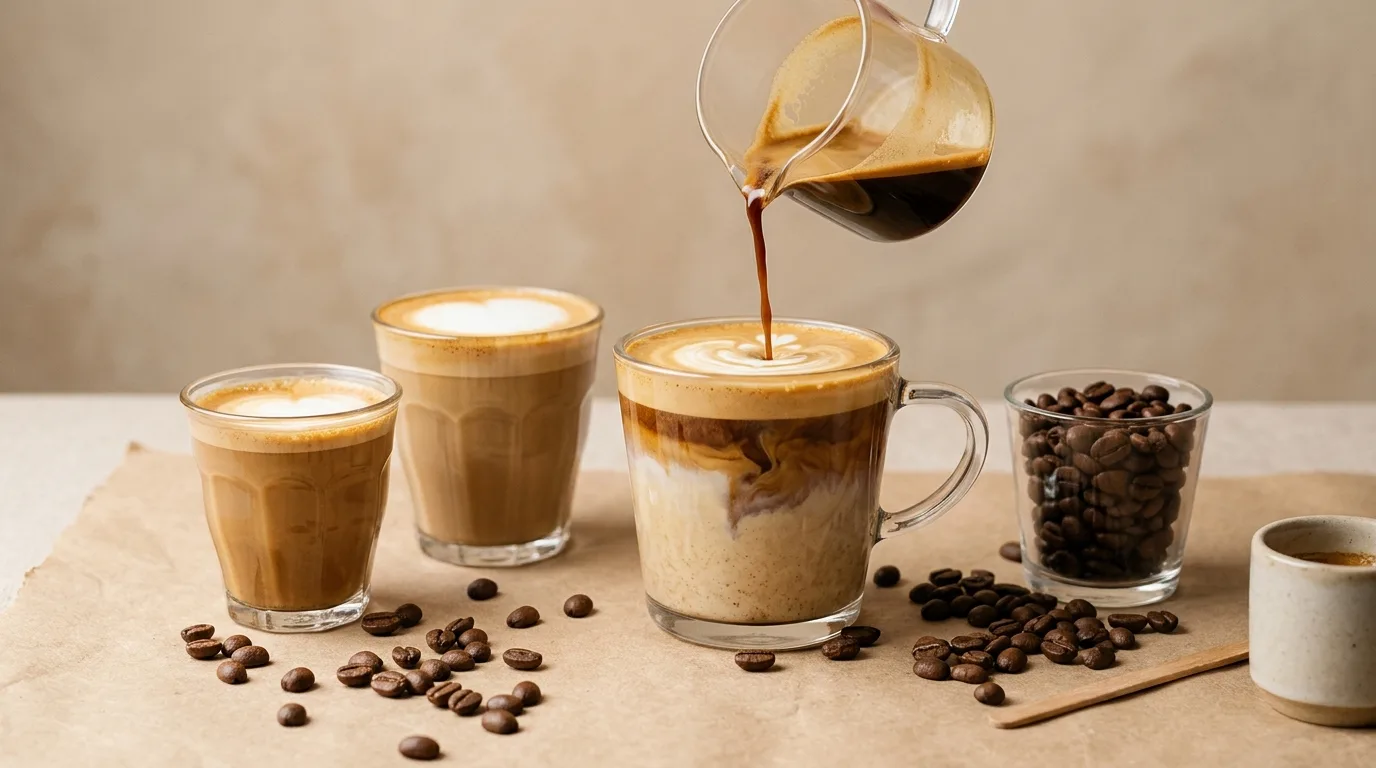
The classic rule of thirds. Equal visual layers of rich espresso, warm milk, and thick, marshmallow-soft foam that insulates the drink.
Double shot build: 180 ml total in a rounded cup
How it tastes in the cup: Airy, pillowy texture with a bold coffee finish.
You do not need to memorize dozens of recipes. Once you know how these six building blocks behave in a cup, every drink name on a café board makes sense.
Finely ground coffee brewed under high water pressure in about 25 to 30 seconds. It is thick, syrupy, and intense enough to taste clearly even through a tall glass of milk.
The golden-brown foam that floats on top of fresh espresso. It forms when high pressure traps tiny carbon dioxide bubbles inside natural coffee oils, holding much of the aroma.
Liquid milk heated with a steam wand. Warming milk breaks down its natural lactose into simpler sugars, making the drink taste noticeably sweeter without adding table sugar.
Created by folding tiny air bubbles into milk as it steams. Tight, wet bubbles make glossy microfoam for a flat white; more air creates the thick, fluffy cap on a cappuccino.
Coffee is already 98 percent water. Adding extra hot water to an espresso shot (as in an Americano) stretches the volume and softens the intensity without adding dairy.
Unsweetened cocoa powder or melted dark chocolate whisked directly into hot espresso before milk is poured, turning a standard latte into a caffè mocha.
Compare all eight drinks at a glance. Select any drink name in the table to load its full layer diagram in the measuring glass above.
| Drink | Part ratio | Visual proportion | Double-shot breakdown | Typical cup |
|---|---|---|---|---|
| 1 : 2 (coffee to water) | 50 ml espresso + 10 ml crema | 60 ml demitasse | ||
| 1 : 3 (espresso to water) | 60 ml espresso + 180 ml hot water | 240 ml mug | ||
| 2 : 1 (espresso to foam) | 60 ml espresso + 30 ml milk foam | 90 ml small glass | ||
| 1 : 1 (espresso to milk) | 60 ml espresso + 60 ml steamed milk | 120 ml fluted glass | ||
| 1 : 2 (espresso to milk) | 60 ml espresso + 100 ml milk + 20 ml microfoam | 180 ml tulip cup | ||
| 1 : 1 : 1 (espresso, milk, foam) | 60 ml espresso + 60 ml milk + 60 ml foam | 180 ml rounded cup | ||
| 1 : 4 : 0.5 (espresso, milk, foam) | 60 ml espresso + 210 ml milk + 30 ml foam | 300 ml tall glass | ||
| 1 : 1 : 3 (espresso, cocoa, milk) | 60 ml espresso + 60 ml cocoa + 120 ml milk + 30 ml foam | 270 ml mug |
Answer three quick questions about how you like your cup—milk, cup size, and texture—and see the exact drink and barista ratio that fits your craving.
Because you picked warm milk in a medium cup with a silky, smooth texture, the Flat White gives you a double shot of espresso folded into glossy microfoam milk.
When you are standing at the counter, the biggest difference between drinks is simply how much milk or water softens the espresso shot.
 Made with Kelas AI